

We'll cover
9 Tips for Finding a Job in 2026
Written by Palak Jain

- Learn basic AI and digital skills to stay job-ready.
- Optimize LinkedIn to get noticed by recruiters faster.
- Create ATS-friendly resumes to pass automated screening.
- Network smartly to access hidden job opportunities.
- Upskill continuously and apply strategically to new roles.
We'll cover:
Learn Basic AI and Digital Skills
By 2026, digital skills are no longer optional. Almost every job, from entry-level job roles to leadership positions, requires basic comfort with technology. You don’t have to turn into a coder or an AI expert, but you do need to get how digital tools work. Take a look around. Companies lean on AI for just about everything, scheduling meetings, answering customers, running the numbers, marketing, all of it. Managers want people who roll with new tools and don’t get rattled by fresh tech. Those are the folks moving up.
Skills worth learning:
- Using AI tools for fast tasks
- Working with office tools (like word, excel, and PowerPoint)
- Understanding digital workflows
- Using collaboration tools like shared drives and task managers
- Basic online research and data handling
Scope:
- Prompt Engineering: If you want to get things done faster—writing emails, making reports, even coding—you need to know how to talk to large language models. Learning how to give clear instructions to AI can save you hours every week.
- Data Literacy: You don’t have to build algorithms, but you do need to know how to read and make sense of the insights AI gives you. That’s how you make smarter business decisions.
- Virtual Collaboration Tools: Remote work isn’t fading anytime soon, and honestly, the tech just keeps leveling up. Get used to the idea of VR meetings, smarter project management apps, and digital whiteboards that actually make life easier. Picture Notion or Asana, but with way more intelligence behind the scenes.
- Cyber-Awareness: As we lean harder on digital tools, basics like privacy and data security really matter. Companies want people who actually pay attention and know how to protect information.
Nobody’s waiting for you to have all the answers from day one. Just dive in. Take an online course, check out a few videos, mess around with some free tools, anything that gets you started. What matters is making that first impression or important. When you show real curiosity and a willingness to learn, employers notice or like that.
Optimize Your LinkedIn Profile
Your LinkedIn profile is pretty much your first impression online. These days, well, by 2026 for sure, recruiters aren’t just sitting back and waiting for resumes to show up.
- Think of the “Featured” section as your own digital portfolio. Show off your best work, attach case studies, drop in links to your GitHub, or upload a quick video intro. Give people something real to look at.
- Speaking of video, a 30-second intro does wonders. It puts a face and a voice to your profile. With so much AI-generated content floating around, a video really makes you stand out.
- Don’t just rattle off a list of skills. Instead, ask for recommendations that actually mention your knack for picking up new tech. It’s way more convincing when someone else vouches for you.
- In your “About” section, avoid generic lines. Share your real story and explain what motivates you to do your work. This personal touch cannot be copied by automation. When people see a genuine human voice instead of scripted text, you naturally create more opportunities.
Many companies now use AI to find candidates, often even before a job is advertised. If your profile isn’t strong, you’re invisible.
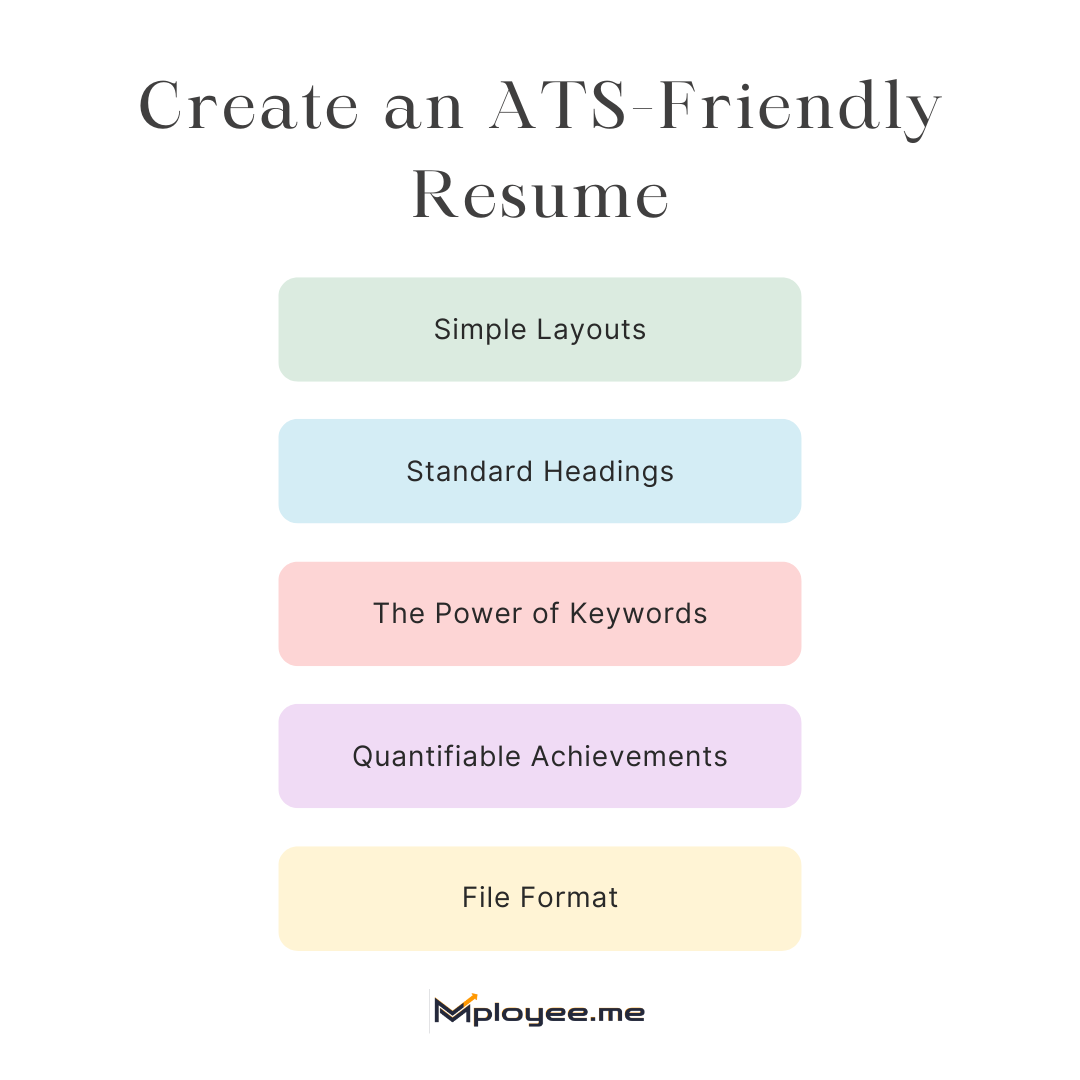
Create an ATS-Friendly Resume
Most companies now use Applicant Tracking Systems that use AI to rank candidates based on relevancy. If your resume isn't formatted with the following things for these robots, a human will never see it.
- Simple Layouts: Avoid tables, columns, or complex graphics. While they look pretty to humans, they "confuse" the scanner, often leading to your data being skipped. Use bullets section wise.
- Standard Headings: Use headings clear, general, and familiar, like “Work Experience,” “Skills,”.
- The Power of Keywords: Follow your resume words with the job opening. If a job description mentions “Strategic Planning,” use the full term exactly as written instead of shortening it to “Strategy,” so your resume matches what employers are looking for.
- Quantifiable Achievements: Use numbers. "Increased sales by 20%" is more readable for an ATS software than "improved sales performance."
- File Format: Unless specified otherwise, always use a PDF or .docx format. Some older ATS versions still struggle with complex PDF layers, so keep it "simple."
How to Check the ATS Score?
Before you send out any job applications in 2026, check your ATS score. It shows how well your resume matches the job and if it’ll get through the ATS filter. Tools like ResuScan really help with this step. ResuScan is an online resume checking tool that helps you understand how well your resume matches a specific job role and what are the missing things. It compares your resume with a job description and shows how much possibility to get passed. This makes it easier to see what recruiters and ATS systems are looking for.
How ResuScan Helps Job Seekers?
ResuScan highlights important areas that may need improvement, such as:
- Missing or weak keywords
- Skills that are not clearly mentioned
- Formatting issues that may confuse ATS systems
Steps to improve your ATS score:
- Add skills mentioned in the job description (if you truly have them)
- Use similar job titles where applicable
- Rewrite unclear points in plain language
- Remove irrelevant details
Boosting your ATS score isn’t about copying the job description line by line. What matters is showing your experience in a way that both the software and real people can get it, fast.
Here's how to use ResuScan:
Step 1: Upload Your Resume in PDF Format

Step 2: Add Your Total Years of Experience

Step 3: Wait 30 Seconds for Results

Start Networking
By 2026, almost 80% of jobs will come from the “hidden job market.” Regular networking gets old fast.
- Be intentional. Forget the basic connection request “let’s connect” messages. Comment on a hiring manager’s post in a way that shows genuine interest and attention. Add a real thought or ask a question that shows you care. That’s how you win the job fight competition.
- Alumni Networks: Don’t be shy about reaching out to persons from your own university, especially if they’re in jobs you respect. You already share some common ground—use that.
- Informational Interviews: Don’t go straight for the job request. Take 15 minutes to learn about the company culture prior to the interview. Then show your real curiosity for a job in their company.
- Niche Communities: Go straight to where your industry really talks: Discord, Slack, or those hidden forums only the insiders find. That’s where the real conversations are.
Build small and genuine connections through short, focused conversations that really matter.
Upskill Continuously
The job market never sits still. What you know today can be a new thing tomorrow.
Areas to focus on:
- Role-specific technical skills
- Communication and teamwork skills
- Critical thinking
- Time management and productivity
- Remote and hybrid work skills
Employers want people who stay updated, keep learning, and always modify themselves to get better.
Apply to the Latest Jobs Online
You won’t find every job in the same spot. Some pop up on big job boards, others hide out on company websites, and sometimes you’ll hear about a role through someone you know. Figuring out where to look is half the battle.
Job Match Pro is Best Option for the Job Seekers
Job Match Pro is an online fast job search tool that shows you how well your resume fits with a particular job. Just upload your resume and the job description, it’ll suggest all the missing things and you can optimize your resume for the job description standard.
- Everything in One Place: You don’t need to go on different job boards for job openings like LinkedIn, Naukri, or Foundit. Just upload your resume and details once, and the tool searches all these major platforms to find the right jobs for you with matching scores.
- Only New Openings: Stop applying to jobs that were posted weeks ago. Job Match Pro only shows you active jobs posted in the last 24 to 48 hours, so your application is always the first for the hiring team.
- Check Your Match Score: For every job it finds, you get a "Match Score", It means this tells you instantly how well your profile fits the role, so you don't waste time applying to the wrong jobs applications.
You get a clear view of what employers want, so you can modify your application and boost your chances before you hit “submit.”
Here's how to use Job Match Pro:
Step 1: Upload Your Resume

Step 2: Choose Preferences

Step 3: Add Skills and Keywords

Step 4: Go Through The List of Jobs

Apply Smart and Consider Hybrid Jobs
These days, working from home is a standard. Anywhere they feel comfortable, folks are making their jobs fit their lives. If you want more flexibility in your career, it really matters where you search. The right remote job sites make finding good opportunities easier and take a lot of the stress out of the hunt. This article explains some of the best platforms and how to use them wisely.
Smart job application tips:
- Research the company before applying
- Read job descriptions carefully
- Apply to roles that offer growth opportunities
- Consider contract or short-term roles
- Be open to startups and small level organizations.
Being open to hybrid roles where you work partly from home and partly from the office can significantly increase your chances of landing a job, as many employers now prefer flexible working arrangements.
Prepare for the Interview (Most Asked Interview Questions)
Getting an interview is a big step, but prepare it very carefully because it's the key to success. In 2026, many interviews will be conducted online.
Some classic interview questions you’ll probably run into:
- Tell me about yourself
- What are your strengths and weaknesses?
- Why do you want this job?
- Why should we hire you?
- How do you handle pressure or challenges?
- Describe a problem you solved
- Where do you see yourself in the future?
Bring out only important things from your job career, which matches the requirement description.
Key Takeaways
The blog provides a detailed guide for a successful job search in 2026.
- Almost all job functions require digital and AI skills to a greater or lesser degree.
- A well-constructed LinkedIn profile significantly speeds up the process for recruiters to spot you.
- Resumes compatible with ATS double your chances of making it to the shortlist.
- Checking your ATS score using a free ATS resume scanner prior to application is a time-saving and effort-reducing measure.
- Networking smartly grants you entry to job opportunities that are not advertised.
- Regular upskilling ensures that you are not left behind in the market that is changing constantly.
- If you apply to new and relevant jobs that are matched exactly to your skills and experience, you will get more calls in response to your application.
- When it comes to online and hybrid hiring, interview preparation is still very important.
By taking these measures, you will be able to maintain your confidence, visibility, and job readiness in 2026.
Which jobs will be in demand in 2026?
Future career opportunities in 2026 will be mainly for those who will be able to combine human and AI capabilities, the machines' reliability and high speed with the creativity and intelligence of humans, and the immediate access of remote workers to corporate resources. Create fast-growing teams of data analysts, cybersecurity, digital marketing, and tech-supported business.
Which job is best for 2026?
What are the 10 steps for finding a job?
Which skill will be most required by 2026?
What are the top 5 future jobs?

Got Your Answer ?
Learn this in 30 Seconds 👇

Career Blogs
Our career blog is your go-to resource for insightful advice, practical tips, and the latest trends in the job market.





Office Address: Room No 305, IIT ROPAR-TBIF, Top Floor (East Wing), M.Visvesvaraya, Rupnagar PB, 140001
- Free Online Resume Review
- Check Resume Score
- Job Description Keyword Finder
- Resume Shortlisting Software
- Resume Scanner for Jobs
- Find jobs that match with resume
- Job matching platform
- Resume job matching
- Job suggestion
- Best sites to find jobs
- Free ats resume scanner
- Auto apply for job
- Full Time Jobs
- I Need a Job
- Information Technology Jobs
Can't Find Something? Get in Touch.
©2026 Padhakku Peek A Book Pvt Ltd (Mployee.me)


