

We'll cover
Should You Add a Photo to Your Resume? Recruiter Insights for 2026
Written by Palak Jain

- Resume photos are common in some countries but not all.
- Photos can help recruiters remember candidates but may bias decisions.
- A professional photo improves branding in creative and client roles.
- ATS systems often ignore photos affecting resume screening and formatting.
- Following guidelines ensures your photo is professional and recruiter-friendly.
We'll cover:
Global Trends: How Resume Photos Are Viewed Across Countries
In certain areas, incorporating a photo in a resume is standard practice while in others it is not. Awareness of international resume photo guidelines combined with free online resume review allows making the proper decision.
Resume Photo Practices by Country or Region
| Country / Region | Photo Practice | Notes |
|---|---|---|
| United States | Rarely used | Employers focus on skills to avoid bias. |
| Europe | Mixed | Germany & France often expect photos; UK usually avoids them. |
| Asia | Common in some | India, China, and Japan often include photos, especially for freshers. |
| Australia & Canada | Usually skipped | Skills and experience are prioritized over images. |
| Global Remote Work | Optional | Photos may help for recognition but are not required. |
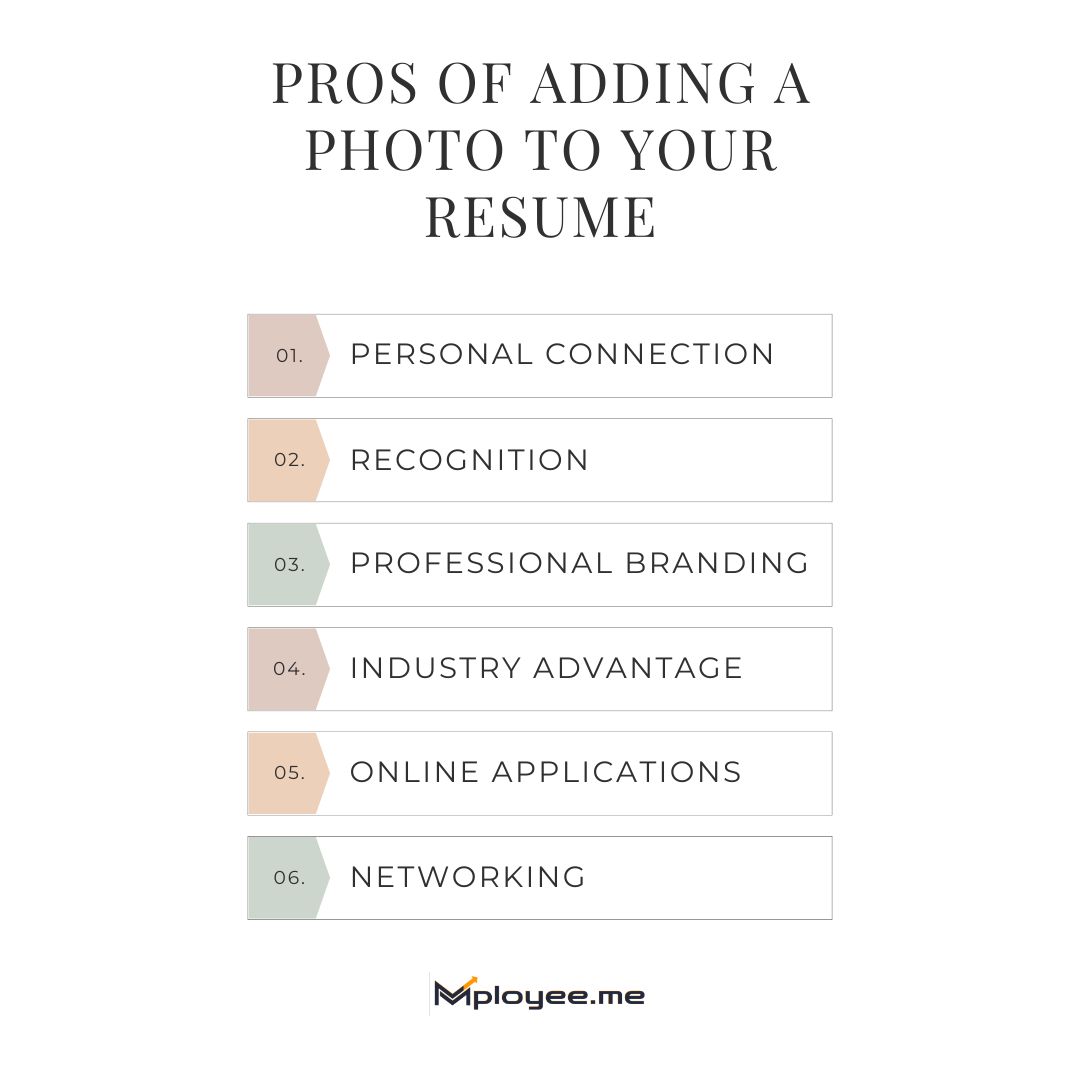
Pros of Adding a Photo to Your Resume
Adding a photo if seen properly, might make your resume more noticeable and give you an edge but do that according to the CV photo rules.
- Personal Connection: It gives your resume a human trait making recruiters more sympathetic and perceiving you as friendly and close to them. But make sure to use a resume scanner for jobs before adding the photo.
- Recognition: It allows the hiring managers to recognize you during the process of going through hundreds of resumes and thus it will be easier for you to get a spot for interviews.
- Professional Branding: It signifies you as a refined and meticulous person which not only earns you trust but also implies that you care about your professional image.
- Industry Advantage: For the roles of creative, media or in customer service, a photo can bring your personality, style and confidence forward making your resume more attractive.
- Online Applications: When you submit your application through portals or company systems, the picture you attached with resume formatting tips will be a part of your professional image that is consistent across platforms, therefore, making it easier for recruiters to spot you.
- Networking: It makes it easier for recruiters to associate your resume with LinkedIn or other professional profiles which can result in smoother follow-ups and rejuvenating your personal brand.
A professional, high-quality photo may enhance the ability of the resume to be remembered and standing out, however, low-quality photos may lead to professional or ruining its chances.
Cons of Adding a Photo to Your Resume
A photograph can be a great help in some situations, but it also has risks that could hurt your chances of getting selected.
- Bias Risk: A picture might trigger an unconscious bias concerning age, sex, or looks which would, unfortunately, influence the decision of the recruiter.
- ATS Compatibility Issues: Numerous applicant tracking systems are not able to process photos; hence, deciphering a resume with a photo could result in misformatting or diminishing your chances of being called for an interview.
- Distraction from Skills: The recruiters could be more interested in your photo rather than your experience and qualifications thus diverting the focus from your strengths.
- Cultural Differences: In those countries or industries where pictures are not so common, putting one on your resume might give it a look of unprofessionalism or being outdated.
- Privacy Concerns: The showing of a picture online could lead to one being impersonated or being anxious about the way one's picture is treated.
- Negative Impression Risk: Very poor first impressions and a loss of credibility can be the outcome of a casual, low-quality, or inappropriate photo.
The consideration of whether or not to include a photo alongside one’s resume is mainly based on the risks posed by the CV photo rules and the point at which the photo can be used as an advantage.
Recruiters’ Insights: What Hiring Managers Really Think
Recruiters are quite definitive in their views concerning resume pictures, and being aware of their likes and dislikes could greatly assist you in making the right option.
- Priortize Skills: A lot of recruiters proclaim that a picture has less influence on hiring decisions than past experience and qualifications; thus, your skills should still be the main concern.
- Memory Aid: A number of recruiters consider a picture as a memory aid for the candidates after the interviews or networking, particularly during the process of checking out several resumes while using resume shortlisting software.
- Quality of Professionalism: The recruiters are the first ones to see the photo quality, a well-captured, professional picture gives a good impression on your meticulousness.
- Disparities in Different Industries: Recruiters working in creative or client-facing roles are more likely to accept pictures while those in corporate or technical areas prefer applications without any.
- Alignment with the Online Profiles: The photograph on the resume that corresponds with LinkedIn or other professional profiles is the one that gets the thumbs up from hiring managers since it makes it easier to link your application with your online presence.
- Recruiter Preferences for Rules: Among the recruiters, there are many who really appreciate candidates sticking to the resume photo guidelines and formatting that show they are aware of the right way to present themselves.
Since the recruiter preferences differ not only by the industry and the role but also by the country, if you know what your target recruiters expect and using resume formatting tips, then that would definitely guide you in making the decision of whether to include a picture or not.
Resume Photo Guidelines: Best Practices If You Decide to Include a Photo
In case of you deciding to add a picture, the communication of your resume will be influenced significantly by a few small yet very thoughtful details. Here are some CV photo rules:
- High-Quality Image: A bright, clear photo is a good choice that can make you look confident and professional as well as it will not be a blurry or casual one.
- Neutral Background: The background does not have to be complicated, just plain and simple keeping all eyes on you and the content of your resume.
- Professional Attire: The styling of your dress should be similar to that of the interview; this would show your effort and respect towards the role you are applying to. This is one of the best resume formatting tips.
- Face-Centered And Smiling: The face should be easily seen and add a natural smile to be seen as warm and inviting.
- Consistent With Online Profiles: The same picture should be used on LinkedIn and other profiles as it will make it easier for recruiters to recognize and trust you more quickly.
- Proper Size And Placement: If the picture is small and placed neatly, then your resume will look clean and at the same time will not distract from your skills.
A resume photo can be a great way to show your personality but yet, if managed properly, can be the case of your background talking instead of you. But do follow the resume photo guidelines.
Legal and Bias Considerations: How Resume Photos Can Affect Fair Hiring
ss is, even if it was not the intention of the employer. It is good to know this beforehand and then the decision can be made.
- Unconscious Bias: The presence of a photo will cause the viewer to quickly guess the age, gender and the general appearance of the person and that may heavily influence the person's decision even if no one is aware of that.
- Discrimination Risks: There are companies that completely remove photos from the resumes of the candidates to prevent the hiring of a person's responder based on looks rather than skill.
- Global Rules Vary: Each country has its own list of hiring rules, so what is acceptable in one country may be frowned upon in another.
- Impact On Shortlisting: A recruiter may end up spending more time looking at the candidate's photo rather than the skills and this could easily turn the focus away from what is really important.
- Encouraging Fair Hiring Practices: The practice of skipping over the photo helps to keep the focus on experience, accomplishments and job-related strengths.
- Optional For Inclusivity: When the photos are allowed but not required, the candidates are given the flexibility of choosing whether or not to share a photo with no pressure.
The understanding of these fairness and legality issues is what remarkably helps you in making a decision about whether or not to add a photo to your application.
Key Takeaways
Different countries have different photo practices for resumes, so knowing the trends and recruiter preferences is crucial.
- The CV photo rules are pretty much different in different countries and even within regions.
- People in the US and UK mostly tend to avoid photos on resumes.
- In Germany, France, and some Asian countries, they are pretty common in resumes.
- Australia and Canada still place more value on skills and experience than images.
- Remote job applications might allow photos but they are not mandatory.
- The cultural and the industry practices should be your guidance when deciding on the inclusion of a photo.
- Keeping up with local trends will ensure that your resume comes across as professional and suitable.
These trends can help you choose the right way and make a professional resume in any region.
Is it a good idea to add a picture to your resume?
Adding a picture to your resume could be a good idea in case of showing the more personal side of you and making the resume more memorable, particularly in the areas of creativity or dealing with clients. In contrast, in most countries, such as the US or UK, it is always better to not include a photo as this could lead to biased opinions on the applicant's side. A photo of a professional can help only if it abides by the proper resume photo guidelines.
Is it okay for a resume to not have a picture?
Is a photo necessary in a CV in India?
What shouldn't be on a resume?
Does an ATS-friendly resume have a photo?

Got Your Answer ?
Learn this in 30 Seconds 👇

Career Blogs
Our career blog is your go-to resource for insightful advice, practical tips, and the latest trends in the job market.








Office Address: Room No 305, IIT ROPAR-TBIF, Top Floor (East Wing), M.Visvesvaraya, Rupnagar PB, 140001
- Free Online Resume Review
- Check Resume Score
- Job Description Keyword Finder
- Resume Shortlisting Software
- Resume Scanner for Jobs
- Find jobs that match with resume
- Job matching platform
- Resume job matching
- Job suggestion
- Best sites to find jobs
- Free ats resume scanner
- Auto apply for job
- Full Time Jobs
- I Need a Job
- Information Technology Jobs
Can't Find Something? Get in Touch.
©2026 Padhakku Peek A Book Pvt Ltd (Mployee.me)


