

We'll cover
From Offer to Paycheck: How Much of a Raise Should You Demand?
Written by Palak Jain

- 📌 Know your industry’s salary raise percentage norms.
- 📌 Consider performance, skills, and role before asking.
- 📌 Calculate ideal raise using market and cost data.
- 📌 Use salary negotiation tips for professional discussions.
- 📌 Avoid unrealistic salary hike percentage requests.
We'll cover:
What is a Reasonable Salary Raise Percentage?
A justifiable increase in salary is based on the company’s standards, your performance, and the state of the market. Informed about the usual ranges from job suggestions platform, you are able to have a more realistic expectation before entering into negotiations.
- Annual company norm: Most firms apply a certain percentage of fixed salary raise during the annual appraisal cycles.
- Industry standard: The average salary raise is directly affected by the different rates of growth in various industries.
- Performance level: The percentage of salary raise accorded to an employee with mediocre performance will be less than that of an employee with extraordinary performance.
- Business growth: Generally, when a company is successful, everyone gets a slight raise in the same proportion as the company’s average salary raise per team.
- Economic conditions: Rising prices for goods and services and inflation are two main factors that influence firms’ decisions on how much to raise salaries.
Being aware of the reasonable range helps you to avoid demand so little or so much. It also presents your expectations as being fair and reasonable.
Factors That Determine How Much Raise You Should Ask For
What constitutes a reasonable raise is not the same for everyone. A variety of personal and market factors determine which increase is appropriate for you and to do so you can take help of the best sites to find jobs.
- Work experience: Generally, employees with greater experience are given a larger salary hike percentage.
- Job role change: Becoming more responsible can validate the request for a higher salary hike percentage.
- Performance level: Consistent good performance and the results speak for you beyond the average salary raise.
- Skill growth: Mastering additional skills not only increases your worth but also your chances of receiving a better raise.
- Market demand: If your job is highly sought after, the employers might allow a pay increase above the average salary raise.
When you look at these factors and practice them, you will be confident and realistic at the same time. Also, it will be easier for the employers to comprehend your raise request and to accept it.
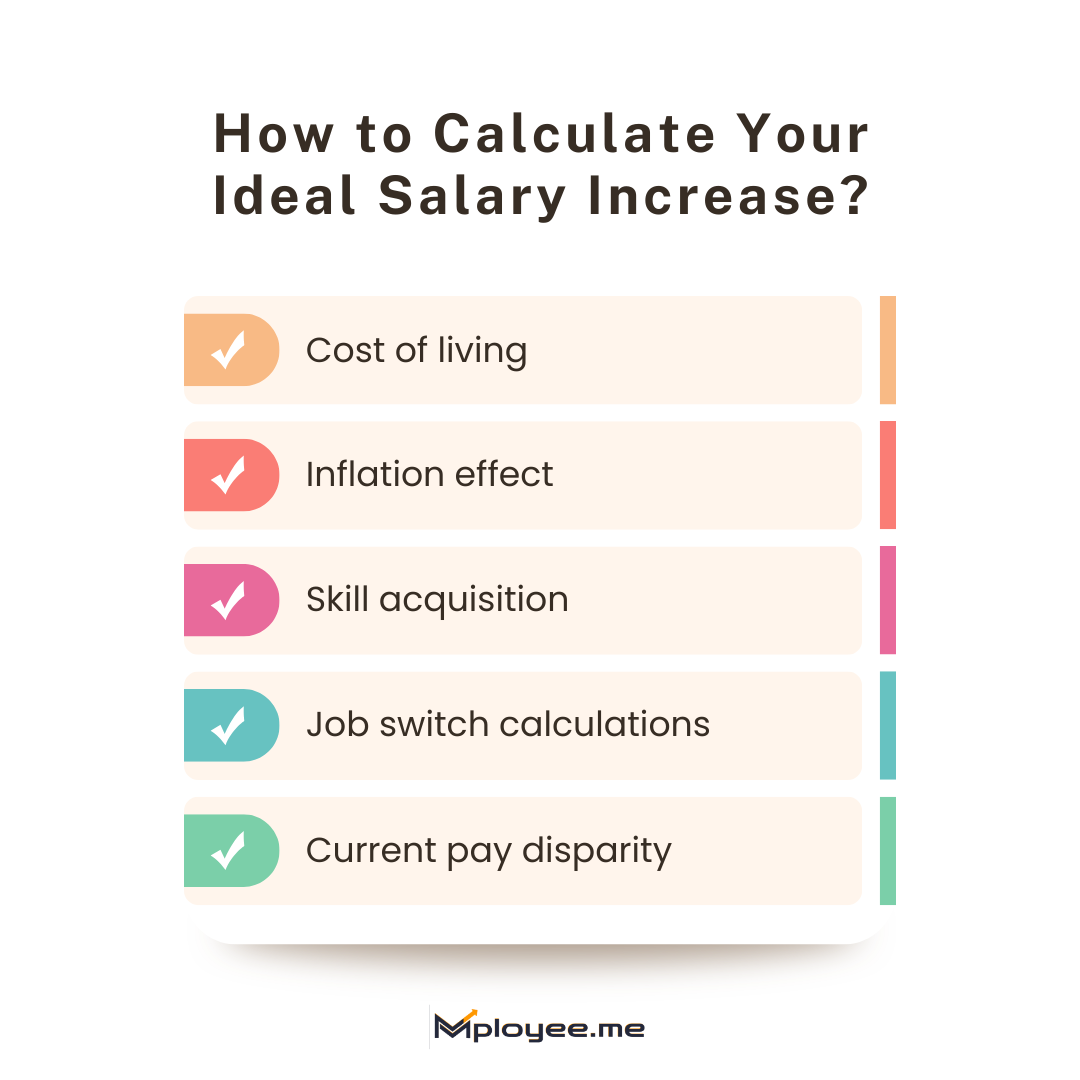
How to Calculate Your Ideal Salary Increase?
The process of calculating your raise enables you to request a number that is both fair and reasonable. It also ensures that emotions are not part of the discussion.
- Cost of living: Increased costs can be a factor leading to the salary hike exceeding the average salary raise.
- Inflation effect: As the prices rise, most workers will up their expectations to more than the percentage of the salary hike they were offered initially.
- Skill acquisition: Gaining new skills or getting certified can be a reason to ask for more than the usual salary hike percentage.
- Job switch calculations: People who switch jobs normally get a higher increase in pay compared to those who grow within the company.
- Current pay disparity: If your salary is less than that of your co-workers in the same position, then it is logical for the company to correct it.
For example, if your present salary is ₹6 LPA and the current salary for the same position is ₹7.5 LPA, then the gap indicates that your worth has increased. Thus, the request for a raise comes out to be logical and fair rather than arbitrary.
Salary Raise Expectations When Switching Jobs
Calculating your current pay and the salary you can expect if you switch jobs will depend on the growth rate in the new role which is usually higher than the current one.
- External job shifts: Generally, job changes would mean a higher percentage of salary increase compared to yearly performance reviews.
- Internal upgrades: Within the same company, promotions may stick closer to the range of the average salary raise.
- Company finances: When it comes to new recruits, employers may have more money to work with hence a more favorable salary increase percentage may be given.
- Role growth: When changing jobs the greater the scope of your role the stronger the growth in your salary.
- Market demand: Companies that are in urgent need of hiring might go beyond the average salary trap in order to draw in new talent.
For example, an internal employee with a pay of ₹8 LPA may have to wait for a long time before the appraisal comes with a sizable increase. On the other hand, the same professional who changes jobs might get ₹10-11 LPA because the role requires an immediate impact.
How Much Hike Is Too Much to Ask For?
To ask for a pay rise is a necessity, but to ask for too much could turn against you. Knowing the upper limits keeps you in the realm of reality and professionalism.
- Unrealistic raises: Requesting amounts that are so far off the market rates could be the worst thing that could happen when negotiating your increase. For example, if a specific position goes through a cycle of 10% to 20% upwards annually, asking for a hike of 70%, may turn out to be totally unreasonable in the eyes of an employer.
- Employee worth: Every company has salary bands in place which are the determining factors for the maximum allowable increase of salary. For example, even the best employees may not go over the salary limits.
- Mismatch of duties and pay: Employers could feel that a large salary increase (or change) without an increment on the position is unfair to them. For example, merely doing the same tasks but asking for a huge raise can cause suspicion.
- Poor timing: Demand made at a time when the business is not doing well, might as well be a sign that you are in the wrong department/sector of the negotiation at that particular moment. Budgetary constraints or measures to improve profitability lower the chances of getting the green light.
- History of growth: Being consistent with your demands for a certain percentage of increase may over time even result in lesser chances of approval. For example, asking for a very high salary increase each year may sound absurd.
Submitting your request in a reasonable manner protects your professional image. It also keeps the dialogue open and pleasant.
Salary Negotiation Tips to Maximize Your Pay Raise
If you want to get a higher salary, you have to put good negotiating skills to your advantage. Calmness and preparation will always be the best approach.
- Prepare early: Prior to negotiations, get to know your targets and use straightforward tips for salary negotiation to keep yourself and your demands.
- Choose the right time: Salary negotiation tips should be used during the times of annual reviews or new offers when the situation is just right.
- Focus on value: Discuss how your contributions to the company were the main reasons for its growth and not merely your own personal hardships.
- Stay polite and clear: Using simple words and a respectful tone, you will be not only echoing your request but also making it stronger.
- Be flexible: If the budget for salaries cannot be increased right away, suggest future reviews or benefits as ways of compensation employing apt salary negotiation tactics.
All the above points are just the prerequisites for good preparation, and the rest is smooth and eventually a positive outcome for both parties.
Mistakes to Avoid When Asking for a Salary Increase
Avoiding common mistakes improves your chances of a successful raise. Each misstep can reduce your pay raise negotiation effectiveness.
Mistake 1: Asking Without Research
Many employees request a raise without knowing market rates or company standards.
Do: Check industry benchmarks and average salary raise data.
Don't: Guess a number or ask based only on personal needs.
Mistake 2: Focusing Only on Personal Needs
Talking about personal expenses rather than value delivered weakens your case.
Do: Highlight achievements and results that justify your salary hike percentage.
Don’t: Emphasize loans, bills, or lifestyle upgrades.
Mistake 3: Being Aggressive or Demanding
A harsh tone can damage relationships and reduce negotiation success.
Do: Stay professional and calm during pay raise negotiation.
Don't: Threaten to leave or compare unfairly with colleagues.
Mistake 4: Ignoring Timing
Asking during budget cuts or performance lows reduces approval chances.
Do: Pick periods like annual reviews or after project successes.
Don’t: Approach management during slow months or busy deadlines.
Mistake 5: Not Preparing Evidence
Without proof of achievements, salary increase requests seem vague.
Do: Collect metrics, results, and examples showing your impact.
Don't: Rely only on verbal claims without support.
How to Justify Your Salary Raise With Data and Results?
Supporting your raise request with distinct proof makes it more likely for employers to agree to it. This step by step method guarantees your method is both organized and convincing.
Step 1: List Your Achievements
Take note of every major thing you have done to include it as bullet points in resume in the past year such as projects, completing targets, and making improvements.
- Example: A fresh follow-up strategy increased client retention by 15%.
Step 2: Quantify Your Impact
Make use of figures and rates to indicate the worth you brought to the firm.
- Example: Reporting processes were made more efficient, thus the team’s overall productivity was increased by 20%.
Step 3: Compare Market Standards
Find out how much people in similar professions earn and point out the position of your salary in relation to your peers.
- Example: In the marketplace, equal positions get up to 12-15% more salary increase than the current raise rate.
Step 4: Highlight Skills and Certifications
Put forward any new skills or credentials that were acquired which would, in turn, increase the value of your position.
- Example: Completed data analysis course certification leading to improved reporting accuracy by 30%.
Step 5: Align With Company Goals
Clarify how your output actually helps the team or the firm achieve their objectives.
- Example: A campaign was directed that caused the sales to increase by 10% this quarter.
Step 6: Prepare a Clear Request
Prepare the amount of the salary increase that you are claiming based on your proof.
- Example: “My 12% salary hike percentage claim is reasonable considering my contributions and market trends.”
Applying these steps makes your argument not just strong but also professional. Furthermore, it indicates that your demand is just and calculated.
What to Do If Your Salary Raise Request Is Rejected?
It is a matter of fact that not every raise request gets approved. However, knowing how to reply keeps the conversation pleasant and opens future chances.
- Be professional: Calmly accept the decision without argument and keep the relationship good.
- Request feedback: Get to know the reasons behind the rejection so that you can work on your performance.
- Talk about options: During pay raise negotiation, benefits, flexible hours, and performance-based incentives may all be considered.
- Define future objectives: Ask for a schedule or criteria for reopening the discussion about the raise.
- Record accomplishments: Create a catalogue of your inputs for the upcoming performance review.
For example, if your request for a raise of 10% is turned down, you can say: “After we finish the new project, can we look at this again in six months?”
Key Takeaways
Knowing how to ask for a raise not only guarantees you fair compensation but most importantly that no professional relationships are damaged through the process.
- Get to know the average salary increase for your position and the standard of the whole industry.
- Take into account your personal performance, skills, and accomplishments before you settle on the percentage of your salary increase.
- Consider cost of living, inflation, and market demand when coming up with your ideal raise amount.
- Understand the difference between promotion within the same company and getting a higher salary by switching jobs.
- The requests that are unrealistic and exceed the range set for the company’s pay or the responsibilities of the position should be avoided.
- Presenting logical evidence and data is necessary for supporting your requested percentage of salary increase.
- Prepare yourself in a professional manner and then follow the salary negotiation tips to make your chances of success the highest.
- Have a plan ready if your request is denied and look into other possible benefits.
Being ready and realistic will make your raise request powerful and professional.
How much of a raise should I ask for?
The justification for asking for an increase in salary should be centered on your experience, output, and trends in the market. If you have gone beyond your initial duties or acquired new skills, it is still justifiable to demand a higher salary growth percentage than the usually offered company increase.
What is the average raise after 1 year of work?
How to figure salary increase percentage?
Can you lose a job offer by negotiating salary?
Is a 20% raise too much to ask for?

Got Your Answer ?
Learn this in 30 Seconds 👇

Career Blogs
Our career blog is your go-to resource for insightful advice, practical tips, and the latest trends in the job market.





Office Address: Room No 305, IIT ROPAR-TBIF, Top Floor (East Wing), M.Visvesvaraya, Rupnagar PB, 140001
- Free Online Resume Review
- Check Resume Score
- Job Description Keyword Finder
- Resume Shortlisting Software
- Resume Scanner for Jobs
- Find jobs that match with resume
- Job matching platform
- Resume job matching
- Job suggestion
- Best sites to find jobs
- Free ats resume scanner
- Auto apply for job
- Full Time Jobs
- I Need a Job
- Information Technology Jobs
Can't Find Something? Get in Touch.
©2026 Padhakku Peek A Book Pvt Ltd (Mployee.me)


